The Muslim Examiner
Rigorous, scholarly answers to the most common questions about Islam
A sermon on Al-Kafi’s chapter on the loss of scholars, and what it asks of the rest of us.
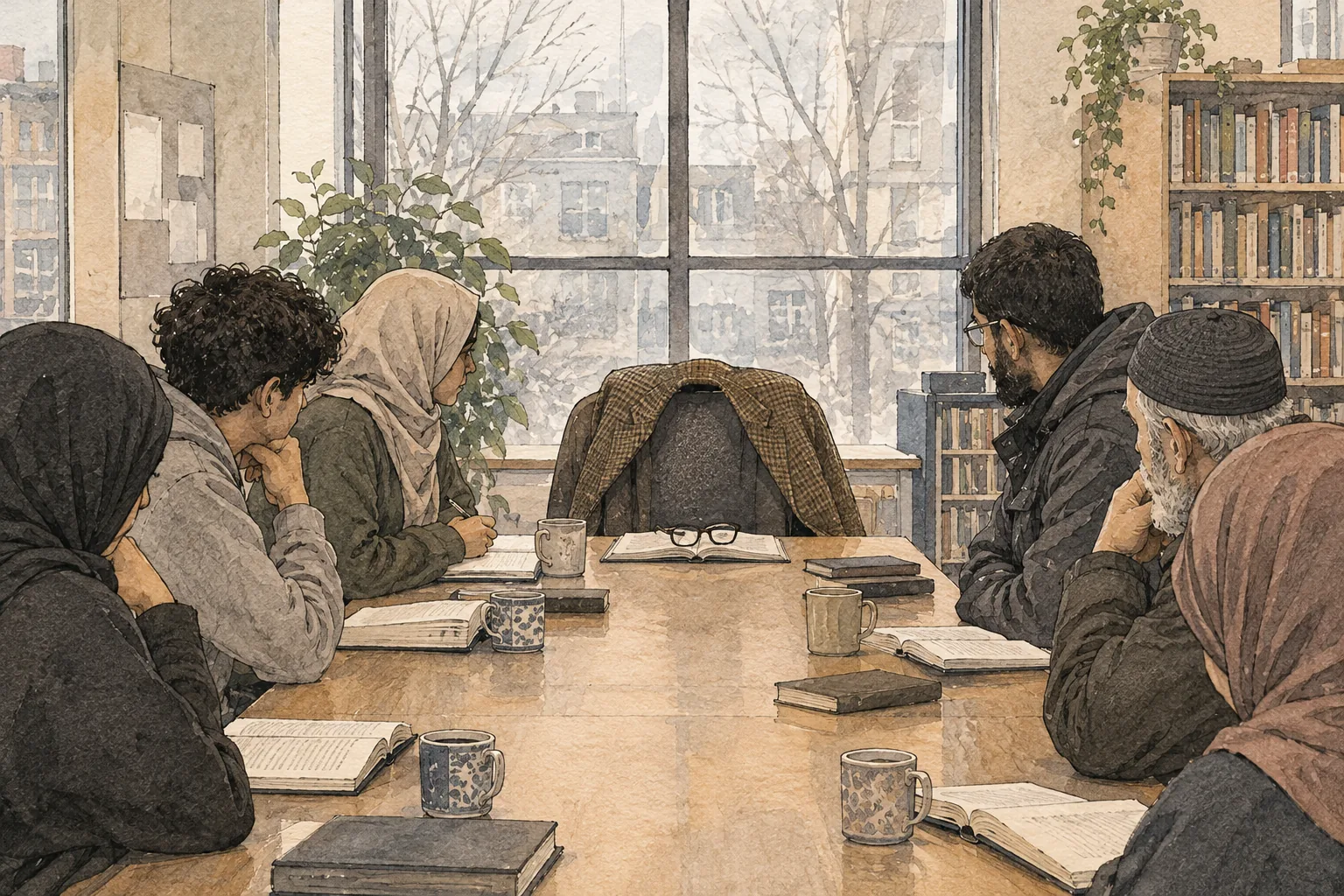
We tend to measure loss by what it takes from a family. The hadith literature measures it differently. In the Book of Knowledge of Al-Kafi, the foundational Shia hadith collection, there is a whole chapter devoted to the loss of scholars[1]. It treats the death of a faithful, learned person as a wound in the community's defenses. This article follows a Friday sermon on that chapter and draws out five lessons: why scholars protect the faith, why we must seek and ask, how to choose our gatherings, how knowledge and action depend on each other, and what we owe once we have learned.
Speaking at the Imam al-Asr Masjid in Washington, D.C., Sayyid Sulayman Ali Hassan, co-imam of the mosque and a Ph.D. in Islamic studies from the University of Chicago, put the point plainly: respect in a community should not go to "those with power," "those with wealth," or "those with many friends," but to those with religious knowledge, because their loss is the greatest loss. You can watch the full sermon on the mosque's channel, and learn more about the community at imamalasr.org.
The sermon begins with a hadith that makes a striking claim: nothing delights Iblis more than the death of a faqih, a scholar with deep understanding of the religion[1]. The point is not about status. It is about priorities. Families, communities and societies should give greater prominence to those who have studied and understood religion, because that is how sound practice and values spread.
A second hadith, from the seventh Imam, Musa al-Kazim (as), describes what happens when a believer dies. The angels weep. The places on earth where that person prayed weep. The gates of heaven through which their good deeds ascended weep. And Islam itself suffers "a hole" that nothing can fill[2]. The hadith then narrows its focus to the believing faqih and calls such scholars the fortresses of Islam.
The image is concrete. Cities in the old world were enclosed by a wall, the sur, to keep invaders out. A scholar plays that role for the religion. A trained, sincere scholar protects Islam from ignorance, superstition and falsehood, and from rulers or interest groups who would exploit people's religious feelings for their own ends. Without that protection, the sermon warns, the religion can be abused and altered until it is no longer recognizable.
Not everyone who speaks about religion fills this role. The sermon points to scholars who are willing to set aside popularity and personal gain to say what is true, even when it is unprofitable and even when it means they will not be invited back. That quality is a blessing from Allah, and a community that values it is protecting itself. The Qur'an makes the same link between knowledge and awe: "Only those of His servants who have knowledge truly fear Allah" (35:28). The same logic explains why our scholars at The Muslim Examiner are introduced with their training.
If scholars are the wall, the rest of us have work to do. The sermon draws four practical duties from the hadith in this chapter. Each speaks to the importance of seeking knowledge in Islam.
Today it is easy to find religious material online, and easy to feel that we can reach our own conclusions. The hadith push back. The sermon recalls a case put to the sixth Imam, Ja'far al-Sadiq (as), about a man with a skin illness who became ritually impure. People told him to wash fully, and he died. Their intention was sincere, but the Imam (as) held them responsible, asking why they had not simply asked whether dust ablution (tayammum) applied when water would harm health[3]. The lesson is that when you cannot determine the right course, the cure is to ask. It is also wrong to ask the most convenient source. Ask someone whose answer you would be comfortable standing behind before Allah. The Qur'an's warning is similar: "Do not pursue that of which you have no knowledge" (17:36).
The sermon relays advice attributed to Luqman to his son, narrated through the companion Yunus ibn Abd al-Rahman: choose your gatherings with your intellect[4]. If you see people remembering God and speaking about religion, sit with them. If you know much, you will benefit; if you know little, you will be taught; and God's mercy may descend on that gathering and include you. If people are not remembering God, the advice is to stay away, since your knowledge will not be valued and your ignorance will only grow. The sermon is clear that talking about the weather, politics or business is not wrong. The issue is gatherings with no awareness of God, filled with exaggeration, gossip and backbiting, which can attract a punishment that reaches everyone present.
Another hadith warns against the person who does not dedicate at least one day each week, ideally Friday, to the affairs of his religion[5]. The sermon suggests practical ways: attend the Friday sermon, which compensates for two units of the congregational prayer, and read a book of Islamic history or theology. Bring the questions you have collected, and put them to a scholar.

Much religious engagement now happens online, in pajamas, with lunch. The sermon does not forbid this, but it points to the instruction of the Prophet (sawas) to meet one another and speak of his teachings, because they are "a polish for the heart." Hearts rust like a sword that is never cleaned. A hadith from the fifth Imam, Muhammad al-Baqir (as), adds that discussing religion is understanding, and studying it is a form of accepted worship[6].
The middle of the sermon turns from seeking knowledge to living by it. Here the chapter on "those who act without knowledge" becomes central[7].

The sixth Imam (as) compares a person who does good deeds without insight to a traveler on the wrong road: the faster he goes, the further he gets from his destination. The sermon gives a modern picture. You rush, type the wrong destination into your GPS, and ten minutes later realize you are speeding the wrong way. Effort matters, but it has to be pointed at the right goal by knowledge.
Another narration states that Allah does not accept deeds without knowledge, and does not accept knowledge unless it is joined to action[8]. The sermon reads this as one harmonious whole. You cannot pray and fast while ignoring your tongue and your eyes. Knowledge calls you to act; if you answer, you gain more knowledge, and if you do not, the knowledge itself departs. In Islam, knowledge is not a certificate. It is what makes the heart more devout and closer to Allah. For more on this balance between effort and dependence on God, read Between Destiny and Responsibility.
The last hadith in this section, from the fifth Imam (as), warns about people who gain knowledge their hearts cannot carry. They throw facts around to win arguments and feel superior, and the knowledge becomes a way to show off instead of a way to improve. Satan can overpower such a person. The remedy the Imam (as) gives is to contemplate the power of Allah over all creation, which humbles the heart: you are discovering God's wisdom, not competing with it. Our article on Satan's greatest tricks explores how arrogance and illusion work together. For readers who feel adrift in a world of information, Youth and the Quest for Meaning takes up the same theme of guidance.
Having learned, you owe something. The sermon cites a hadith that calls teaching the zakat of knowledge[9]. Zakat purifies wealth. Teaching purifies what you have learned and expresses gratitude for it. The sermon does not accept the excuse "I still have much to learn." You will always be a student, but you can teach children the Arabic alphabet and the basics of recitation, or share what you do know with young people in your community.
The sermon adds a hadith that Allah did not take a covenant from the ignorant to learn until He took a covenant from the knowledgeable to teach[10]. The responsibility therefore falls first on those with knowledge. They must not sit in an ivory tower and blame a community for not appreciating learning. Spreading a culture of knowledge is a multigenerational process.
Teaching has a limit, which is humility. Teach what you have studied and are sure of. When you do not know, say so. The Imams (as) warned of two traits that destroyed earlier communities: worshipping Allah in ways you are not sure of, and giving rulings from your own opinion[11]. They even advised that someone who is not a scholar should say "I don't know" instead of "Allahu a’lam," since the latter can suggest scholarly standing.
According to the hadith in Al-Kafi, the death of a believing scholar is a great loss for the angels, the earth and the gates of heaven, and it leaves a gap in the defenses of Islam that nothing else can fill[1][2].
Without knowledge, even sincere deeds can go wrong or be unaccepted. The hadith link right action to knowledge, and the Qur'an asks, "Are those who know equal to those who do not know?" (39:9).
The narrations treat them as inseparable: knowledge guides action, and action keeps knowledge alive[8].
The death of a scholar is not only a reason to mourn. It is a reminder of what we have been entrusted with. If scholars are the wall, the community has to build it: by honoring them, asking them before acting, sitting in gatherings where God is remembered, setting aside a day each week, and teaching what we learn. The sermon ends where it began, with the idea that knowledge is a trust, held with humility and carried into practice. A community that does this does not wait for the loss of scholars to feel its weight.
Read more from Sayyid Sulayman Ali Hassan, or send a question for scholarly review.
General background on the book: Al-Kafi on Wikishia. Sermon: Sayyid Sulayman Ali Hassan, Imam al-Asr Masjid, Washington, D.C., September 11, 2026.